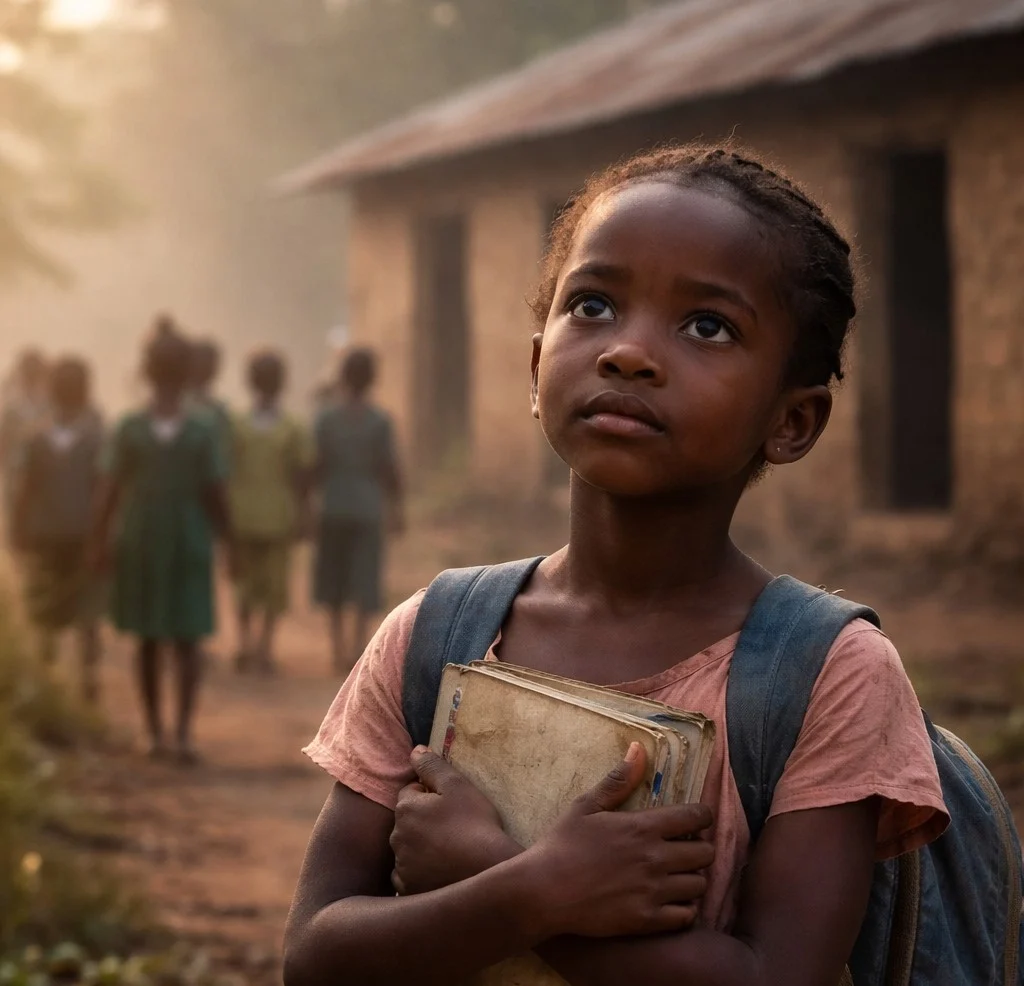
Amara is nine years old. She wakes before sunrise every morning, helps her mother fetch water, then spends her day minding her younger siblings while the school bell rings somewhere in the distance. She can write her name, just about, and count to twenty. But Amara has never sat in a classroom. She has never held a report card or solved a maths problem on a chalkboard.
Amara is not a statistic. But she is part of one, and it’s a statistic the world keeps trying to look away from.
250M+
Children worldwide currently out of school
~60%
Are girls, disproportionately affected across Sub-Saharan Africa
1 in 5
Children of primary-school age in developing regions never enrol at all
These numbers are enormous. And when numbers get enormous, they stop feeling real. They become policy language, donor reports, footnotes in speeches. Meanwhile, children like Amara keep growing up, smart, curious, capable, but shut out of the one thing that could open every door.
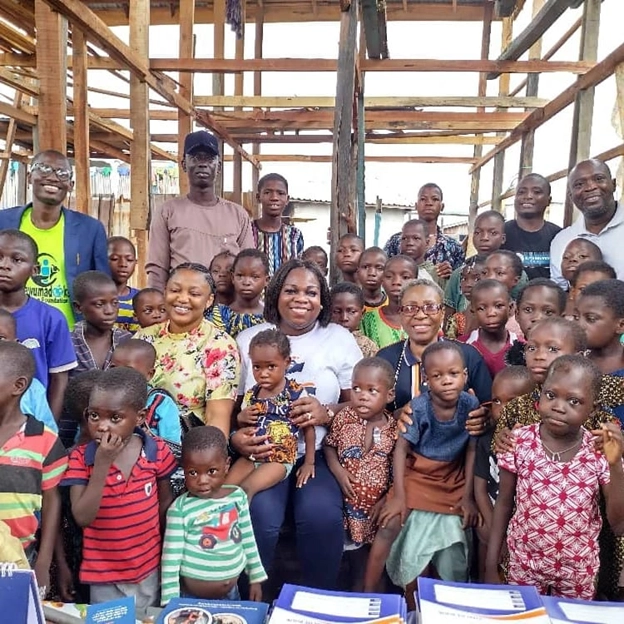
That is exactly why IA-Foundation exists. Not to manage a crisis from a distance, but to walk into communities, sit with families, and do the patient, unglamorous, necessary work of getting children back into learning.
Why Do Children Fall Out of School in the First Place?
If you’ve never had to pull a child from school, it’s easy to assume the reasons are simple, poverty, neglect, indifference. The truth is far more tangled, and far more human.
Poverty is the root, but it branches in many directions.
For many families, keeping a child in school is a genuine sacrifice. School fees, uniforms, exercise books, the cost of transport, these are not small things when a household is surviving on the edge. Older children, especially girls, are often needed at home to contribute economically or to care for younger siblings. It is not heartlessness. It is survival arithmetic.
Distance is underestimated.
In rural areas, the nearest school can be five, eight, ten kilometres away. A long walk for an adult is a dangerous journey for a seven-year-old, particularly in communities where roads are unpaved, seasons are harsh, and girls face real safety risks travelling alone.
The school itself can be the problem.
Overcrowded classrooms. Undertrained teachers. A curriculum taught in a language the child doesn’t speak at home. For children who have already fallen behind, returning to a formal classroom can feel humiliating. The system doesn’t always know how to welcome them back.
“The question is never whether these children can learn. The question is whether we have built spaces worthy of them.”
What IA-Foundation Actually Does
There are organisations that write about the problem. IA-Foundation is one that works on it, on the ground, in the community, with the child at the centre.
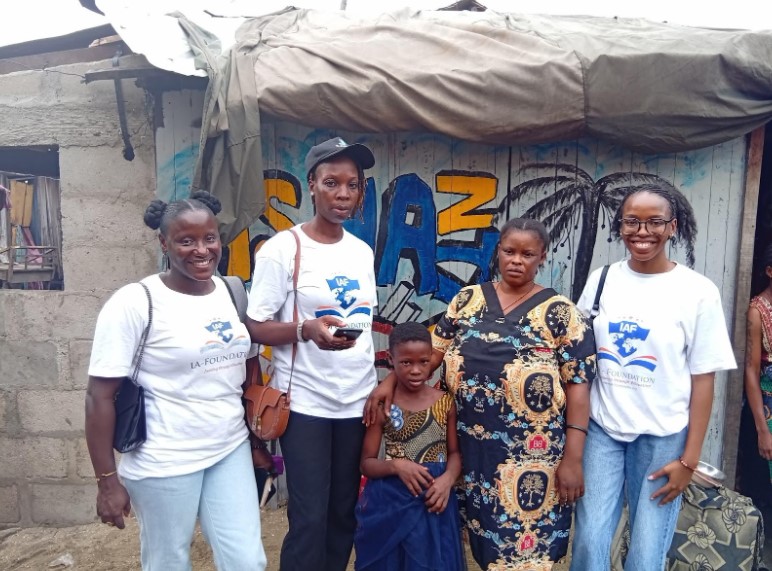
Our approach starts with identification. Before a child can be helped, they have to be seen. We work with community liaisons, local leaders, and parents to find the children who have slipped through the cracks, the ones who are old enough for school but aren’t there. The ones hiding in plain sight.
From there, the work is about trust. Trust with parents who are understandably sceptical. Trust with children who may associate school with failure or embarrassment. Trust with communities who have been promised things before and seen nothing change.
We do not parachute in solutions. We build them locally, flexible learning spaces, bridge programmes for children who need to catch up, support systems for families who need more than just a classroom to make attendance sustainable. Every intervention is shaped by the people it serves.
The Cost of Doing Nothing
It is worth saying plainly: the cost of leaving these children without education is catastrophic, not just for them, but for all of us.
A child who doesn’t complete basic education is dramatically more likely to live in poverty as an adult, more vulnerable to exploitation, more likely to experience poor health outcomes, and less able to participate in the economic and civic life of their community. Multiply that by millions, and you have a generational crisis that compounds itself.
Education is not a luxury. It is the infrastructure on which everything else rests. Health. Stability. Economic growth. Democracy. All of it depends on people who were taught to think, to read, to reason. When we leave children behind, we are dismantling that infrastructure brick by brick, slowly, quietly, and at enormous future cost.
“Every child who falls through the cracks today is a bridge we failed to build for tomorrow.”
What Change Actually Looks Like
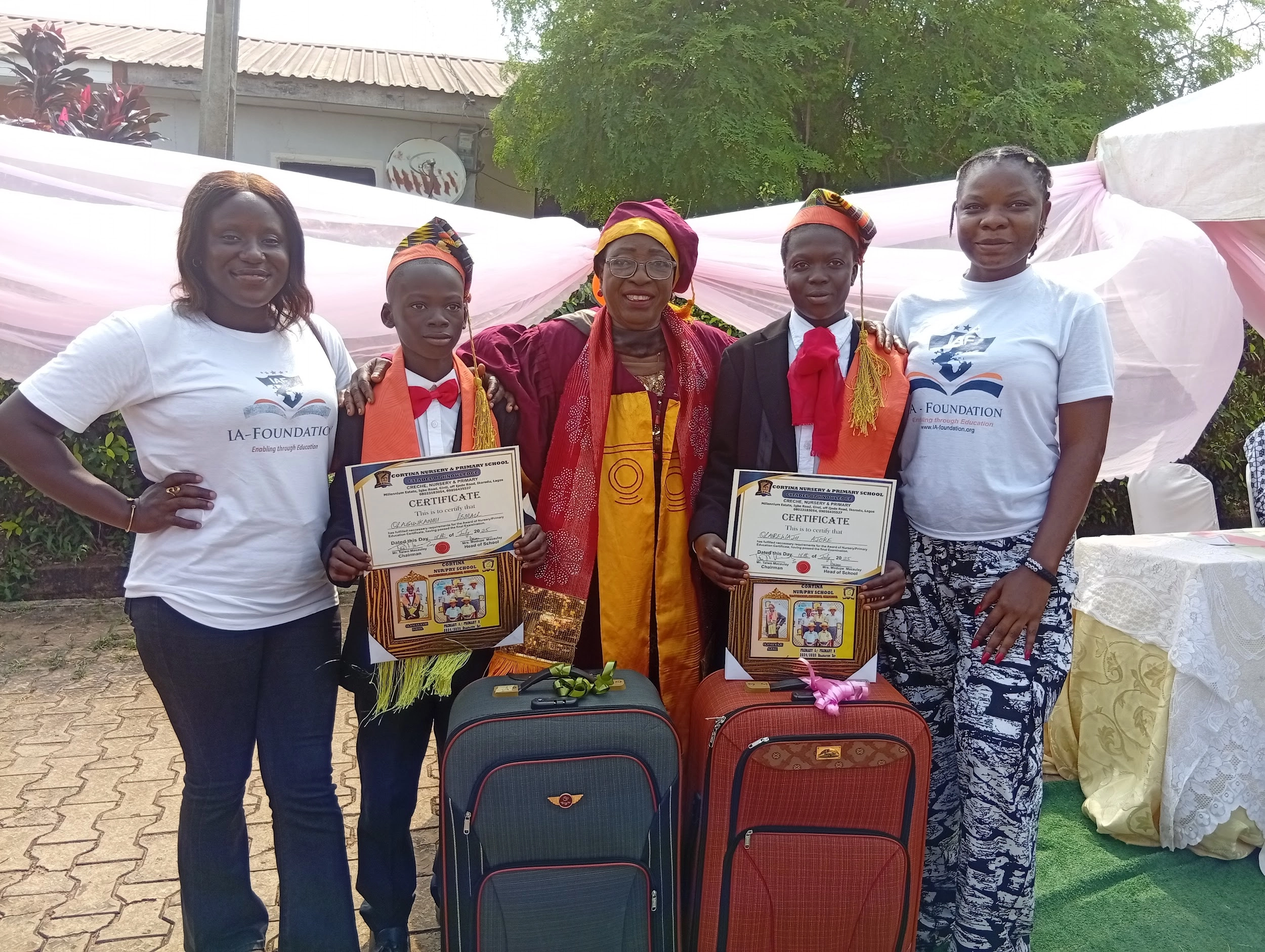
Change, in this work, doesn’t always look dramatic. It looks like a mother who finally says yes. It looks like a boy who used to spend his afternoons doing nothing now sitting in a circle with other children, sounding out words he didn’t know last month. It looks like a teenage girl who was told school was not for her discovering, quietly but powerfully, that she was wrong.
These are small victories. We don’t pretend otherwise. But they are real ones, and they ripple. A child who learns to read becomes an adult who can read to their own children. A girl who stays in school becomes a woman who insists her daughter does too. Progress in education is slow, but it is also durable. It echoes forward through generations.
That is what IA-Foundation is building, not just school attendance today, but a culture of learning that survives beyond any single programme or donation cycle.
How You Can Be Part of This
If you’ve read this far, something in you already cares. That matters. Caring is where everything starts.
You don’t have to be a philanthropist or a development economist to make a difference. The truth is, the most powerful thing most of us can do is choose to show up in some way, however small, for a child we’ll never meet.
Join the Movement
Every contribution, of money, time, or voice, puts a child closer to a classroom. Here’s where you can start:
Donate Today
Volunteer with Us
Share This Story
Amara, the girl at the beginning of this story, is fictional. But she is also entirely real, because there are millions of children just like her, right now, waiting for someone to decide they are worth the effort.
At IA-Foundation, we have made that decision. We hope you’ll make it with us.